Skip to content


Late last year, the Lithuanian capital of Vilnius was elected European Green Capital for 2025. And while much of that decision was centred around the city’s efforts in renewable energy, biodiversity restoration, and climate adaption, its bold initiatives in the field of sustainable mobility deserve equal recognition.
Despite a harsh winter climate of frequent freezing temperatures and snowfall, officials have stated the ambition of becoming an “Amsterdam of the North”, following a six-year policy transfer project funded by the European Union with the seven partners, including the Netherlands.
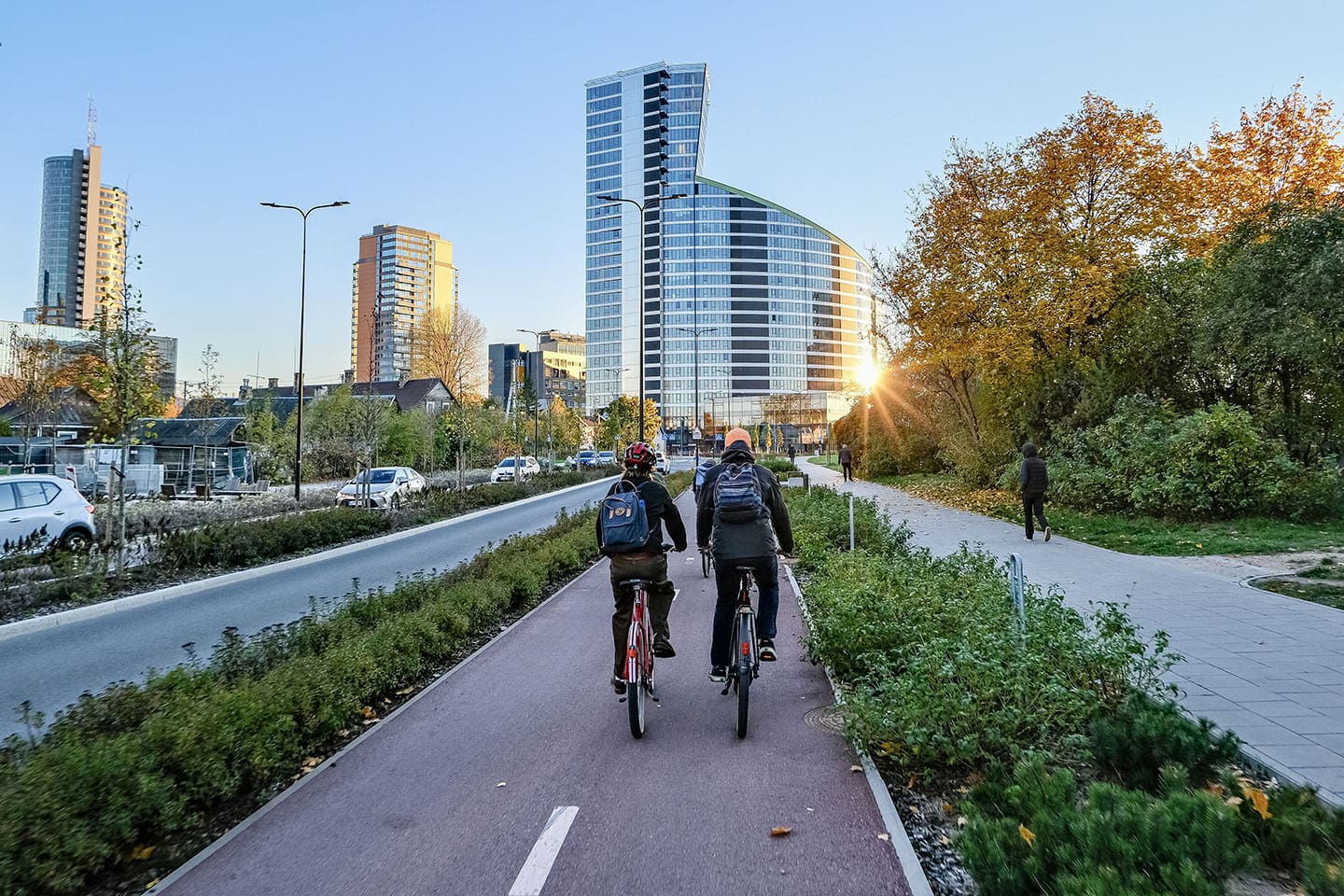
Between 2016 and 2024, Vilnius built 164 kilometres of Dutch-inspired, red asphalt cycle paths, and went from a 1.5 to 4.5% cycling modal share — a three-fold increase — in two political terms.
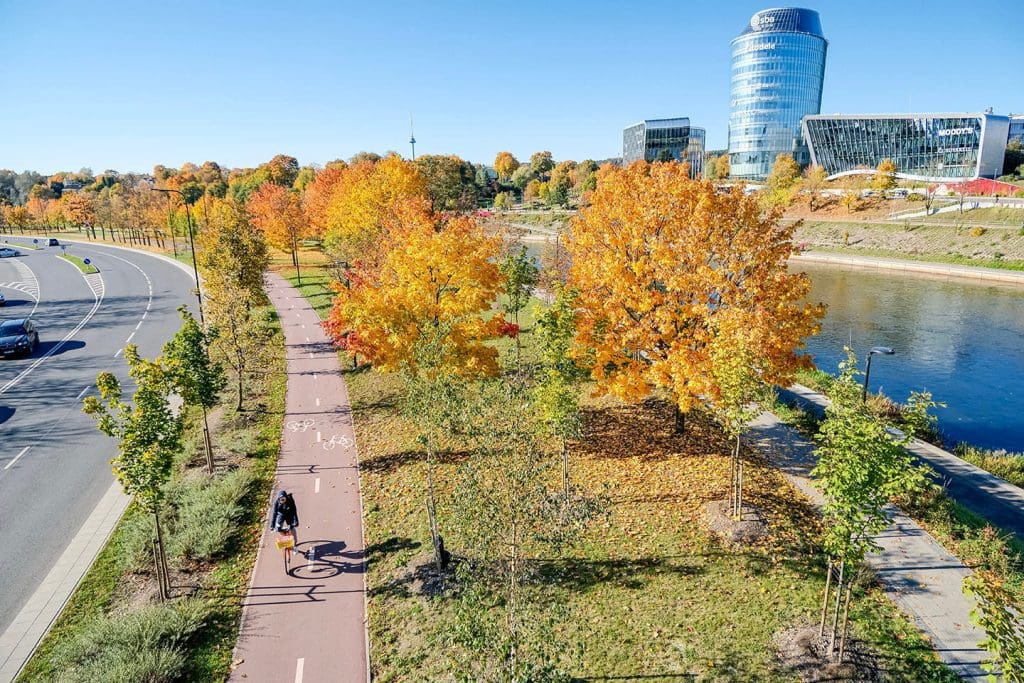
“We started the idea which often is said to be how the Dutch did it — build it and they will come. It’s a chicken and egg question, and the city has to make a change and show people that it’s nice, safe and comfortable to ride a bike. That’s where you start,” explains Jonas Simutis from municipal transport agency JUDU.
Now focusing on quality over quantity, the network is being increased in size by an average of 20 kilometres per year, with the aim of putting 60% of residents within 250 metres of such a high-quality facility and growing the mode share to 7.5% by the end of the decade.

In 2020, 40% of motor traffic in Vilnius’ city centre was passing through with no intention of stopping — and up to 70% on specific streets during the morning peak. In order to keep the social and economic heart of the city pumping, the city introduced a new traffic circulation plan.
Practically a copy-paste of the plan implemented in the Dutch city of Groningen in 1977, the centre is divided into four zones, each with one main entrance and one or two exits. Traffic in each loop is one-way only, regulated by signage, barriers, and a 20 km/hr speed limit. Under the plan, residents and visitors of the Old Town continue to be able to drive to their homes, workplaces and attractions, but can’t drive directly through the city centre. All motor vehicles, with the exception of public transport, must exit from the same zone they entered.

“Cars cannot dominate the most sensitive and beautiful part of our city. We will not be able to even imagine the appeal of the Old Town without these changes after a while, just like now we can’t understand how smoking was once allowed in restaurants,” says mayor Remigijus Šimašius. Since its implementation, the Old Town of Vilnius has enjoyed a 20% reduction in noise pollution, 10% reduction in motor traffic, 40% reduction in collisions, and 12% increase in visitors — restoring much of the original beauty, liveability, and prosperity of the UNESCO World Heritage Site.
Not resting on its laurels, earlier this year, Vilnius built Lithuania’s first Dutch-inspired cycling street. Stretching two kilometres on P. Vileišio Gatvė in the Antakalnis District, it established a new typology in the emerging infrastructure network.
The cycling street is characterised by clear signage, red asphalt, cobblestone median, a 30 km/hr speed limit, reduced parking, and traffic filtering. These features combine to make it clear cyclists are the main users, and drivers — as guests — should adjust their behaviour accordingly.
This typology now enjoys legal status in Lithuania’s traffic regulations, making it punishable by law to exceed 30 km/hr or overtake a cyclist. Critically, it makes it available to cities across the country as an option where it is impractical or impossible to install bike lanes.
All in all, Vilnius’ sustainable mobility revolution proves it isn’t technical knowledge or budgetary considerations that are holding back cities from transforming themselves. The same strategies and principles that helped cities across the Netherlands to become more liveable, inclusive, and prosperous can be replicated elsewhere — even in colder and more car-dominated urban environments — with some political will and imagination.
Chris Bruntlett is an author and urban mobility advocate. He is currently international relations manager at the Dutch Cycling Embassy.
Read also: What the world can learn from Copenhagen’s cycling revolution