Skip to content


By Sarah Kennedy, ChavoBart Digital Media / Yale Climate Connections
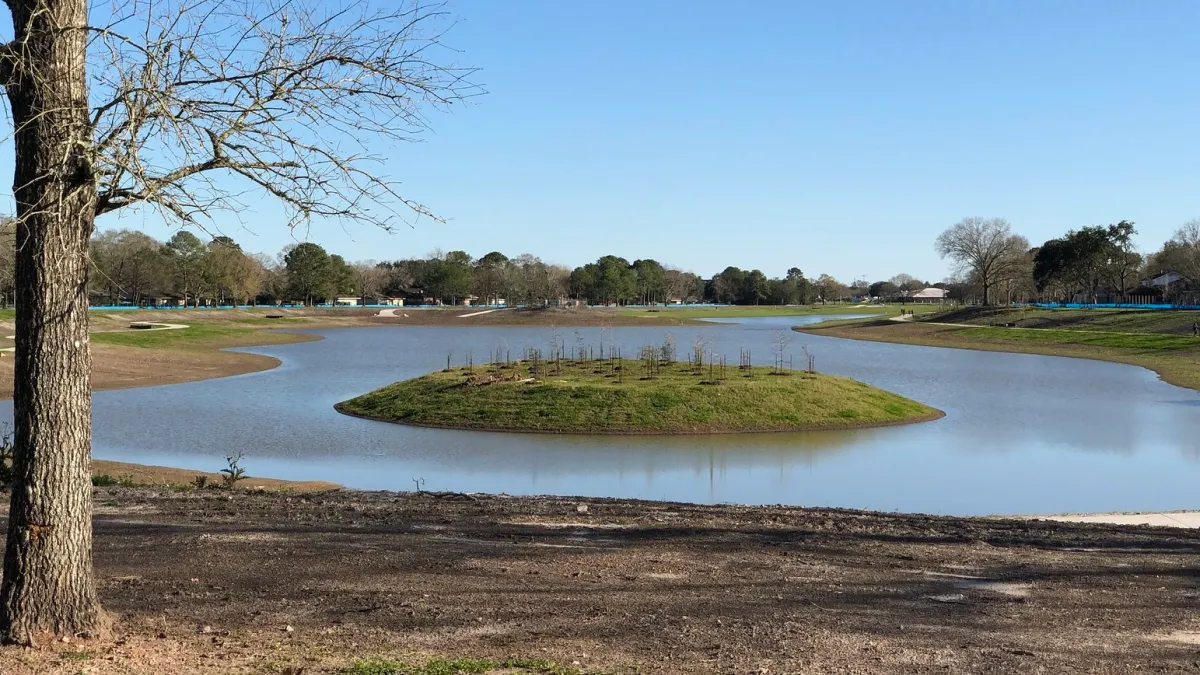
Over the past decade, an abandoned golf course in the Clear Lake area of Houston has been transformed into an urban oasis called Exploration Green.
Community members go there to walk and bike along six miles of pathways, past ponds and wetlands teeming with birds and other wildlife.
But at its core, the area was designed for a more functional purpose: protecting homes from flooding.
David Sharp is with the Exploration Green Conservancy, a nonprofit that helps support the project. Sharp: “We have a lot of homes in the neighbourhood that with any kind of heavy rain would tend to flood and get water inside, which of course is devastating for the homeowners.”
And the risk is growing as the climate changes.
So residents approached the local water authority for help. The agency purchased the old golf course and created a series of stormwater detention ponds.
During heavy rain, the ponds collect water that would otherwise run off into streets and homes.
Sharp: “We have the ability to retain 500 million gallons of water.”
It’s then slowly released into the local bayou.
Sharp’s group, which is largely volunteer-led, helped restore natural habitat around the ponds …
… so nearby residents can escape to nature — and return to a dry home.
- This article was originally published by Yale Climate Connections.