Skip to content



After losing momentum for a few years, New Zealand is once again making steady progress in the decarbonisation of its power grid.
The context: The nation of 5.3 million people aims to reach 90% renewable electricity by 2025, and has an aspirational goal of hitting the 100% mark by 2030. It also wants renewables to cover 50% of all the country’s energy needs by 2035, meaning it’ll have to rapidly electrify its transport and industrial sectors and slash agricultural emissions.
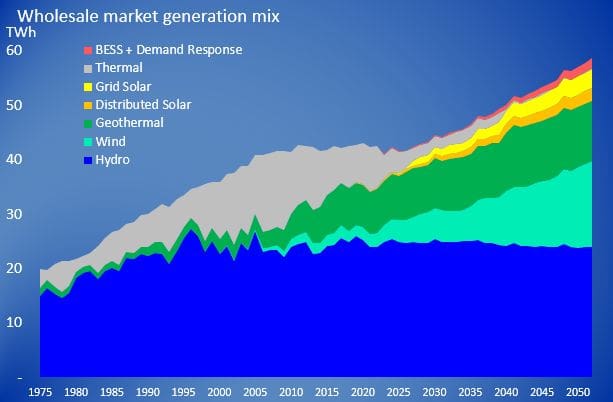
New Zealand has long been a clean energy leader thanks to its vast hydro and geothermal resources, though it relies on fossil fuels as a backup source, particular during dry years when hydropower output declines. To fully decarbonise the grid, it will need to replace coal and gas with geothermal, wind, solar, and energy storage technologies.
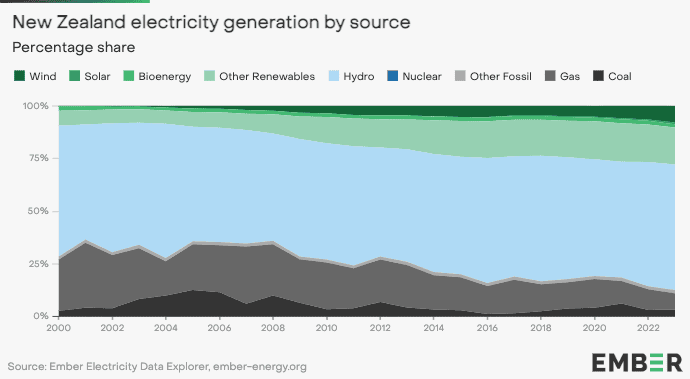
The latest: Renewables accounted for 85% of New Zealand’s electrical output in 2024, according to data collated by research group Ember. That’s a slight decline from 2023 levels due to a 15% fall in hydropower generation — although wind, solar, and geothermal output reached record levels.

Among other additions to the grid, a 177MW wind farm was commissioned during the year, while a new geothermal plant, in Tauhara, was brought online in the second half of the year. After several months of that plant ramping up, geothermal accounted for a record 24% of the country’s power supply in January 2025.
The developer behind the Tauhara plant, Contact Energy, is building other geothermal facilities as well under a US$700 million investment push.
However, the International Energy Agency says hydro and geothermal alone can’t provide enough capacity to meet New Zealand’s clean energy goals. “A sizeable share of the required new capacity will need to come from wind and solar,” it says.
Momentum is now building in the variable renewables segment.
“We’re seeing huge growth in wind, battery energy storage, and solar generation, with hydro and geothermal remaining as the generation base,” says Meridian Energy, the country’s biggest power producer. “As more and more renewable generation comes online, we can expect to see cleaner, cheaper energy for New Zealand’s homes and businesses.”
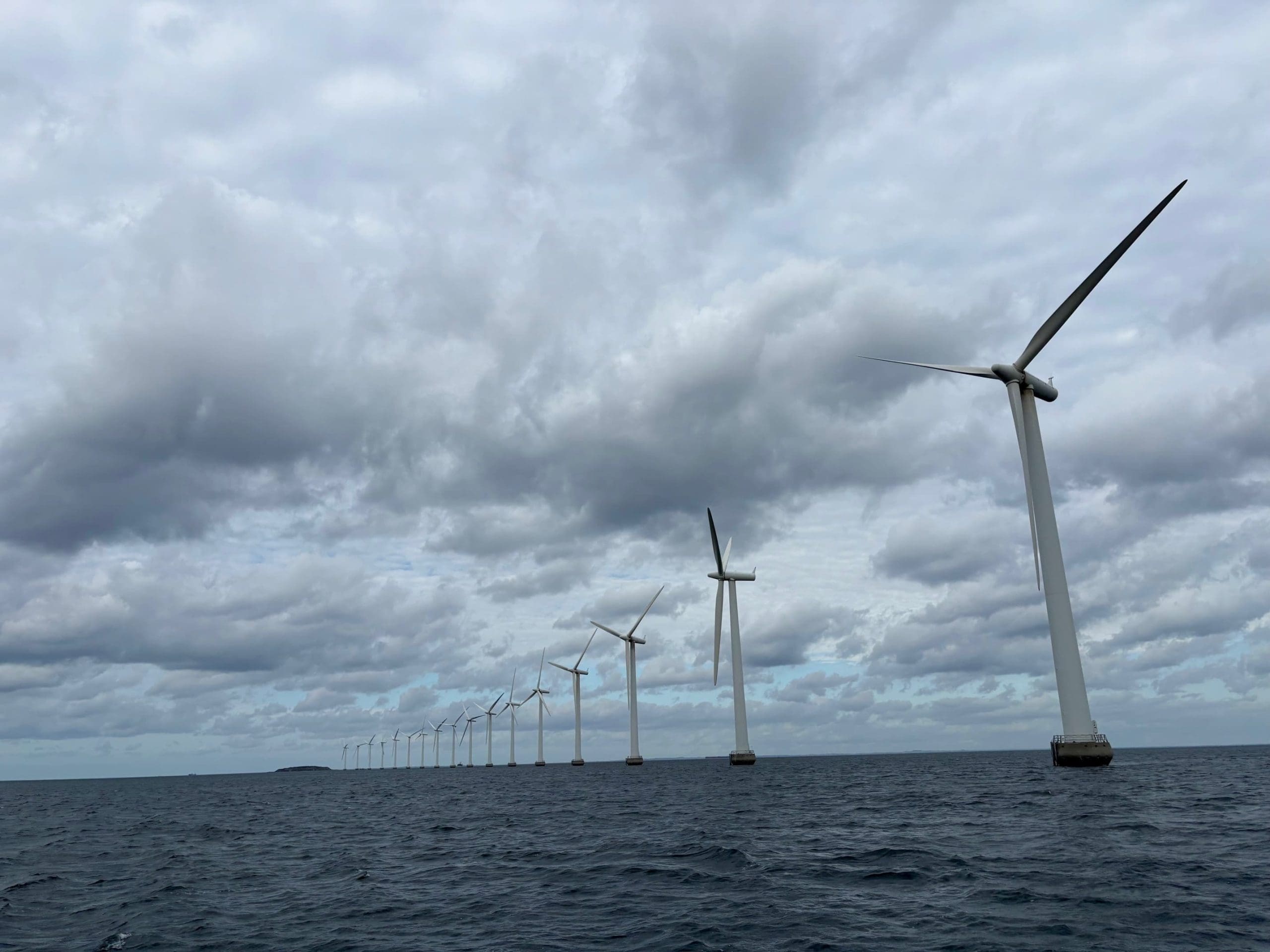
Some big wind and solar projects are in the works, including a mammoth 1GW solar park. Meanwhile, the government is gearing up for the launch of an offshore wind industry.
Yes, but: The new, conservative government is seeking to roll back some climate progress. Among other things, it wants to reverse a 2018 ban on offshore oil and gas exploration.
Further, Meridian Energy expects that some thermal generators (coal or gas plants) will remain in the mix until around 2040, despite strong growth in output from variable renewables.