Skip to content


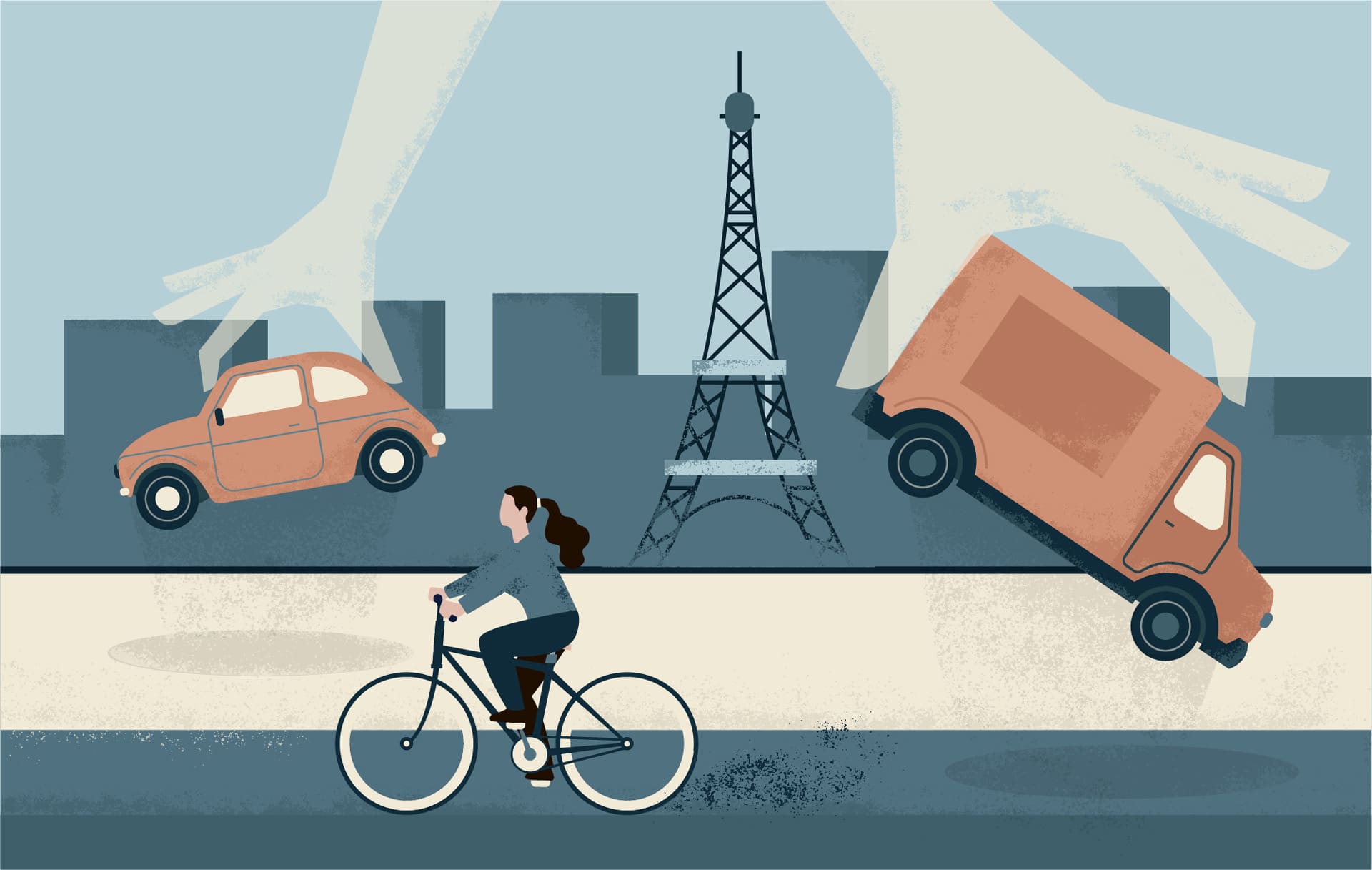
Amid a broader push to reduce car usage and bolster the city’s air quality, Parisians have approved a resolution to ‘green’ another 500 streets and ban cars from using them.
Two-thirds (66%) of those who voted approved the measure, which will see an average of 5 to 8 streets per neighbourhood being transformed over the next three years, the city says. As a first step, authorities will identify appropriate streets in consultation with local residents, and then carry out feasibility studies.
Once complete, more than one in ten Parisian streets will be fully pedestrianised, according to Reuters.
As part of the same vote, residents also approved a measure to introduce “more local shops, housing and greenery” on the Île de la Cité — the island in the centre of the city — and to transform the Saint-Martin and Saint-Denis precincts into “green and pedestrianised” squares, among other initiatives.
The context: Since 2020, more than 10,000 outdoor parking spaces have been removed and 197 streets greened as Paris works to become “a garden city” that’s better suited to cyclists and pedestrians.
Last year, voters approved a resolution to raise the base price for on-street parking for big cars to €18 an hour in the city centre.
The city’s mayor, Anne Hidalgo, has made the French capital a leader in urban climate-protection and anti-pollution health measures. Aside from significantly curtailing space taken up by cars, she’s set out to make Paris a “15-minute city” where people can reach most daily necessities by foot or bicycle in that time.
Data shows that car traffic in the city has more than halved since the Socialists took power in the capital at the turn of the century, Reuters reported.