 Skip to content


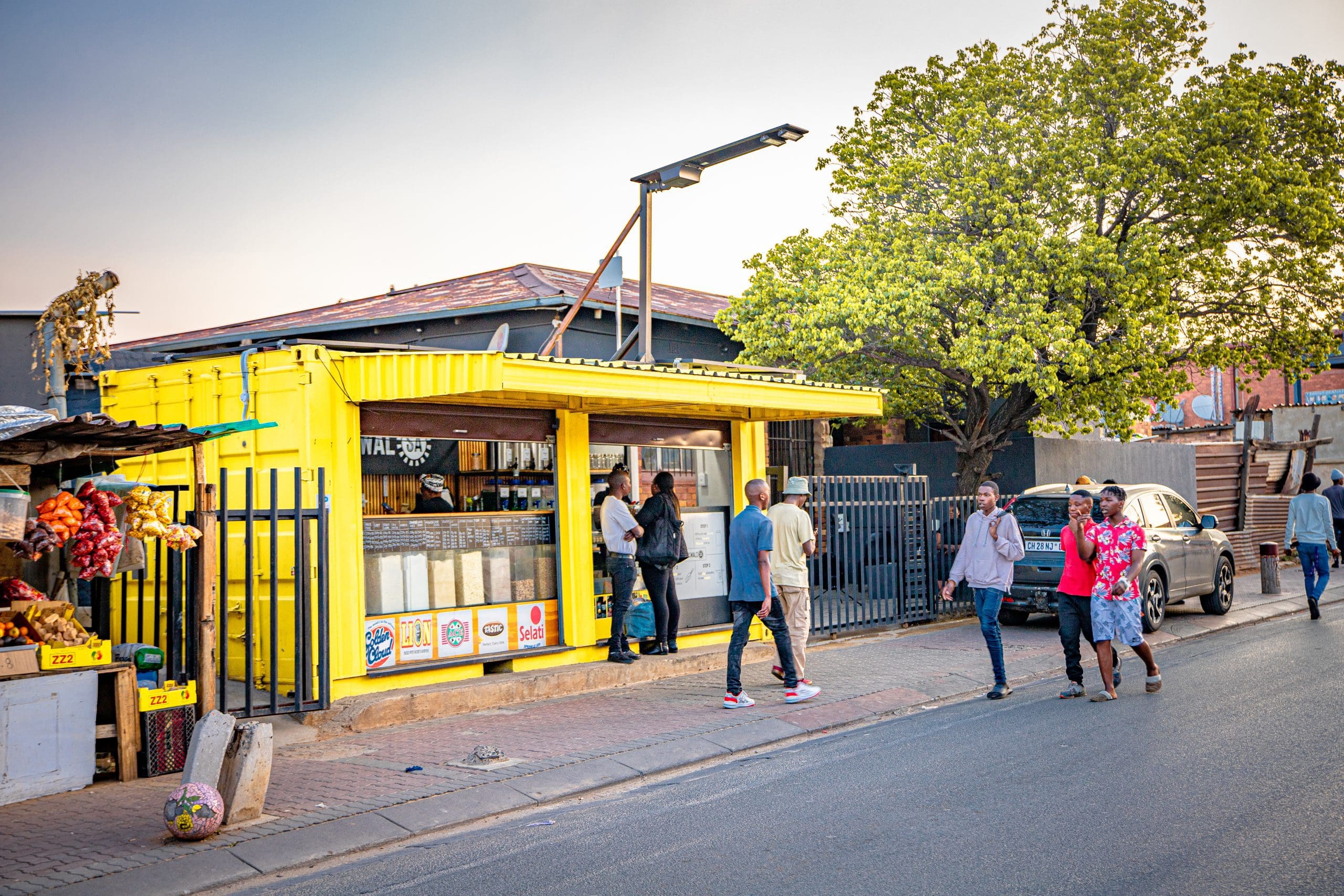
It’s a cruel irony that low-income earners tend to pay more for their groceries than their wealthier peers — they generally have to buy things in small quantities, meaning they lose out on bulk discounts.
Miles Kubheka, a South African entrepreneur, has set out to flip the script.
In April 2022, one of his businesses, Gcwalisa, opened its first shipping container-based retail outlet in a sprawling Johannesburg township.
Kitted out with bulk dispensers, the shop operates entirely on a “weigh and pay” model. Gcwalisa buys goods directly from food manufacturers and then sells it on to local residents, who can choose how much of each product they want, based on how much cash they have at the time.
Goods are placed into reusable containers or recyclable paper bags for the journey home.

The overall idea, Kubheka explains, is to give township residents access to wholesale prices.
“We believe that people are not poor, they are poorly paid,” Kubheka says. “And oftentimes, poorly paid consumers bear the brunt of poverty tax, where food and other household items are more expensive when not purchased in bulk.”
For the time being, most township residents have no choice but to shop at smaller, more expensive local stores that offer smaller-pack items — even though those goods are typically marked up by 30 to 50%, according to Khubeka. And packaging tends to account for some 8 to 15% of food costs, he adds.
By cutting plastic packaging out of the equation, customers save money and waste is vastly reduced.

“Our mission at Gcwalisa is to democratise access to nutritious food and other home-care goods within low-income communities,” Kubheka says.
Since launching the pilot store, Gcwalisa has refined its model and is working to open 25 others in partnership with local community-based organisations.
It’s also gotten into the electricity game — its outlets now sell low-cost solar power to nearby homes and businesses, who have long grappled with the country’s rolling blackouts and steep annual tariff hikes.









11 Responses
Thanks
Lovely article on Gcwalisa. It would be interesting to hear Miles commenting on Spaza shops in the Townships he is operating in, that are owned/run by illegal foreigners in terms of competition.
Great article and a brilliant example on how retail needs to adapt to local market conditions. This model can work all through the continent.
Great Article King👑🔥
Great article indeed my guy 👏👊
Wish this can come to South Africa🤟Maybe we can leave a better life.
Brilliant!
This is very inspiring 👏🏽. She saw the need and a niche in the market and its a win . Better than repackaging in unbranded containers you know what you buying
Great initiative – it’s always struck me as so perverse and unfair that “bulk discounts” are most easily accessed by the people who least need them. The poor pay a tax just for being poor.
This is a great story of change. We need more of this throughout our country as this addresses not being able to afford goods but reducing waste too. Excellent.
Nice story. Hopefully this will break the dependence on Spazas, who impose a heavy burden on township residents. I like the saving on packaging.