
Home » Climate & Energy » Rhino poaching falls sharply in South Africa after rangers cut off their horns
Share

Rhino poaching falls sharply in South Africa after rangers cut off their horns

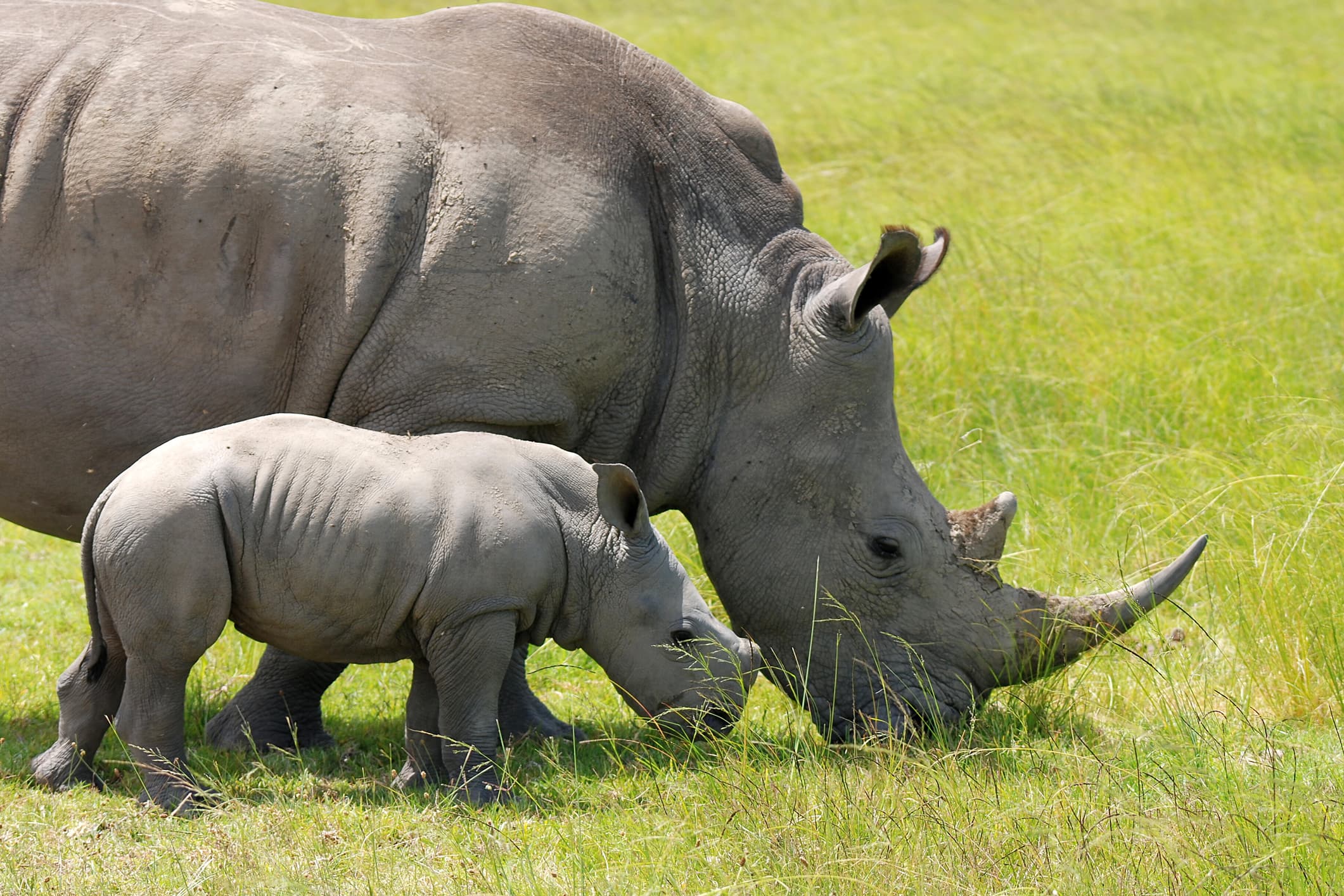
A white rhino with its calf.
A white rhino with its calf. Photo: Dreamstime.

The number of rhinos killed in South Africa has fallen sharply in recent months thanks to a de-horning programme in a game park that’s long been targeted by poachers.

In May and June this year, 43 rhinos were killed across the country, down from 76 in the same period a year before. Poachers kill the animals for their horns, which are sold to buyers in East Asia.

The decline comes after staff at the Hluhluwe iMfolozi Park in the KwaZulu-Natal province de-horned more than 1,000 rhinos, environment minister Dion George said in a statement.

South Africa’s rhino population numbers have increased in recent years thanks to a broad range of anti-poaching interventions, including de-horning and the use of drones and other technologies.

At the end of 2023, the country had 16,056 rhinos (2,065 black and 13,991 white rhinos). That’s an increase of 1,032 from two years before.


Share this post:

Our content is free to read. However, if you’d like to help us scale up and maximise our reach and impact, you can make a one-off or monthly contribution here.

Related Articles

The share of fossil fuels in the nation's electricity mix has rapidly shrunk.
A pioneer of big batteries and other decarbonisation tech, the state aims to get to 100% net renewables within seven years.
The pioneer of commercial wind energy says it will reduce emissions by at least 82% by 2035, relative to 1990 levels.
An alternative housing system is emerging across the region and it could create a global blueprint.
Iron-air batteries operate on the principle of "reversible rusting" and provide long-duration storage.
In the salt flats of Gujarat, India, an unlikely green revolution is underway as informal salt farmers go solar.

Comments