Skip to content



Domestic power plants that run on fossil fuels covered just 10% of Portugal’s electricity consumption in 2024 — a new record low in a country that’s fast established itself as a frontrunner in the global energy transition.
Electrical output from gas-fired power plants and other dirty energy facilities slumped to 5.1TWh, the lowest since 1979, according to data provided by grid operator REN. Portugal shut its last coal plant in 2021.
Meanwhile, locally generated renewables supplied 71% of Portugal’s power needs through 2024 (and accounted for 80% of all electrical output for the national grid). Imports from Spain, which also gets the vast majority of its power from low-carbon sources, covered 20% of the country’s electricity consumption.
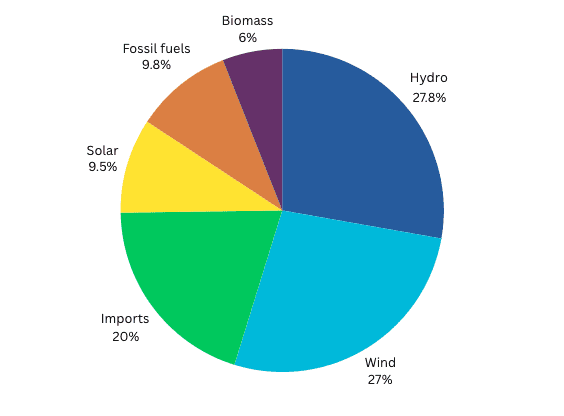
Portugal’s electricity mix in 2024: Hydro at 28%, wind 27%, imports from Spain 20%, solar 10%, fossil fuels 10%, and biomass 6%.
Notably, solar generation was up 37% from 2023 levels due to a surge in installations.
In the overall gas market — which includes power generation, home use, and industrial applications — total consumption fell 17% year on year to the lowest level since 2003. Gas use for power generation was down 56% from 2023.
According to modelling by the International Energy Agency, Portugal will likely source more than 90% of its power from domestic renewables by 2030, a milestone that’ll be shared by the likes of Denmark and Chile.