Skip to content


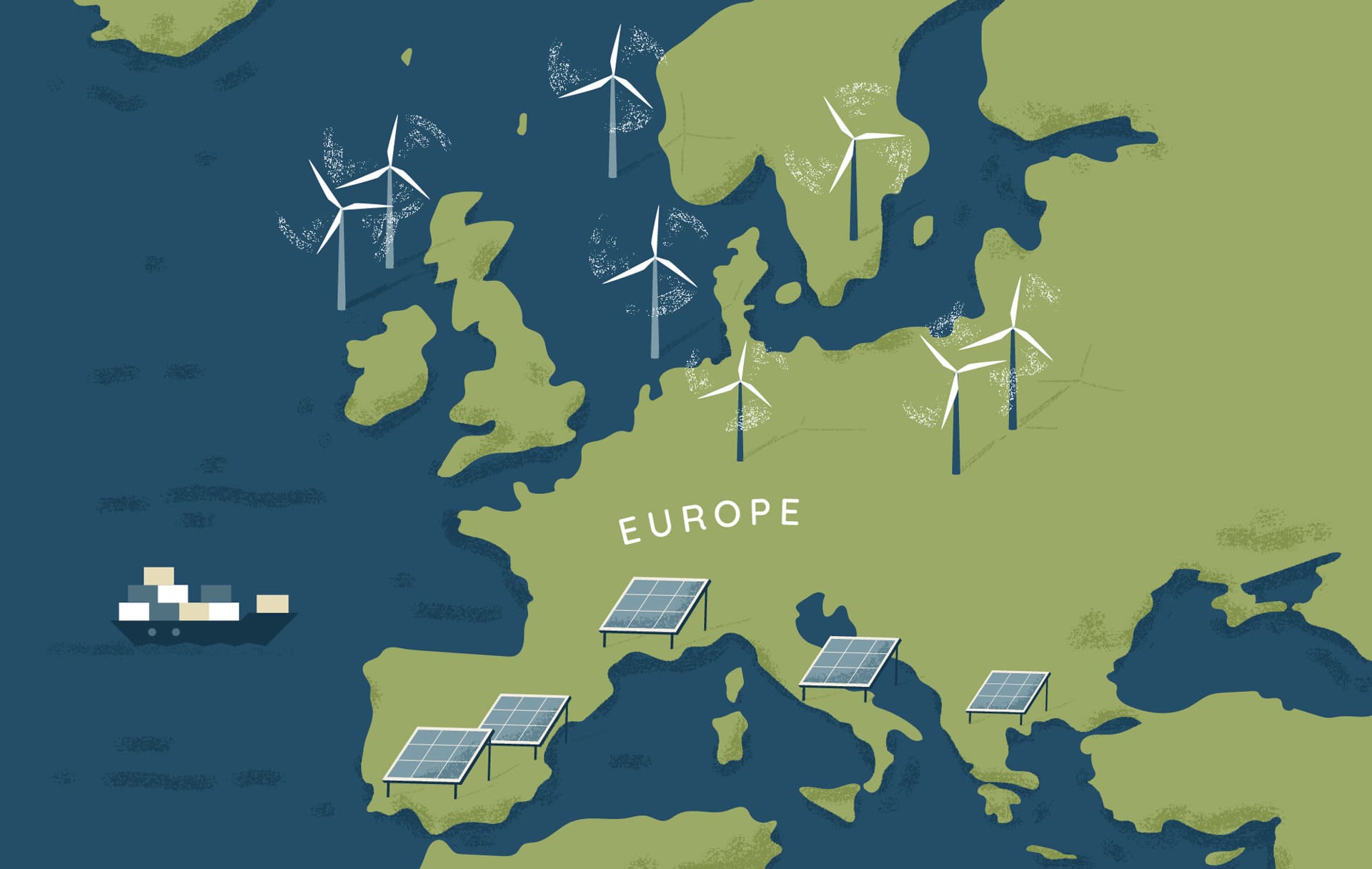
Europe’s electricity sector emissions fell sharply again in 2024 thanks to the ongoing surge in renewable energy installations and a recovery in hydro and nuclear output.
Emissions from power plants declined 16.5% last year, according to an analysis by the Centre for Research on Energy and Clean Air (CREA). That follows a 25% slide in 2023.
The rapid decline has been driven mainly by decreased coal use, the research group said. Solar and wind are quickly displacing both coal and gas, and improved generation from existing hydro and nuclear plants is helping too.
According to the EU’s stats office, 46.9% of net electricity generated in across the bloc in 2024 came from renewables.
However, CREA said, the EU’s emissions in other sectors — particularly transport — increased through 2024 and partially offset the power industry’s decarbonisation gains. As a result, total emissions from burning fossil fuels were down 2.9%, following an 8.5% reduction in 2023.
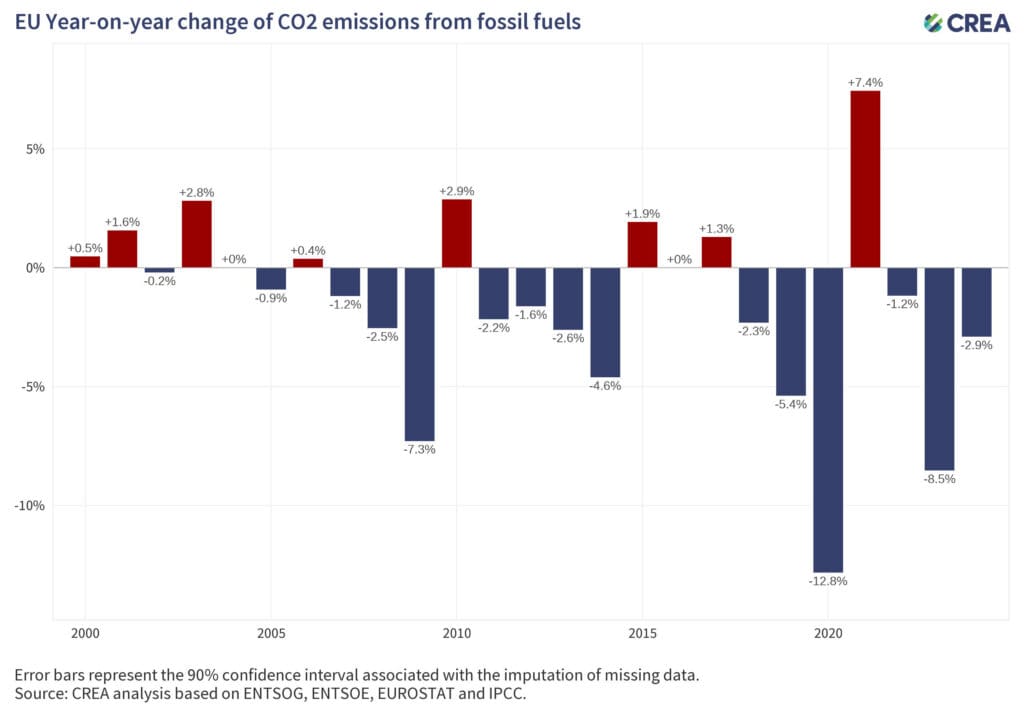
“To meet its targets, the EU needs to speed up electrification and other decarbonisation measures in transportation, industry and buildings,” CREA said. “This is also essential to reduce the bloc’s reliance on imported oil and gas, a key enabler of Russia’s invasion of Ukraine.”
On its current trajectory, the EU may fail to meet its 2035 climate goals unless it spurs a faster transition in the transport and industry sectors, which are harder to decarbonise than power.
“The EU has been so successful in cutting power sector emissions that the sector can’t make up for lack of progress in other sectors anymore,” CREA analyst Lauri Myllyvirta said in a post.