Skip to content


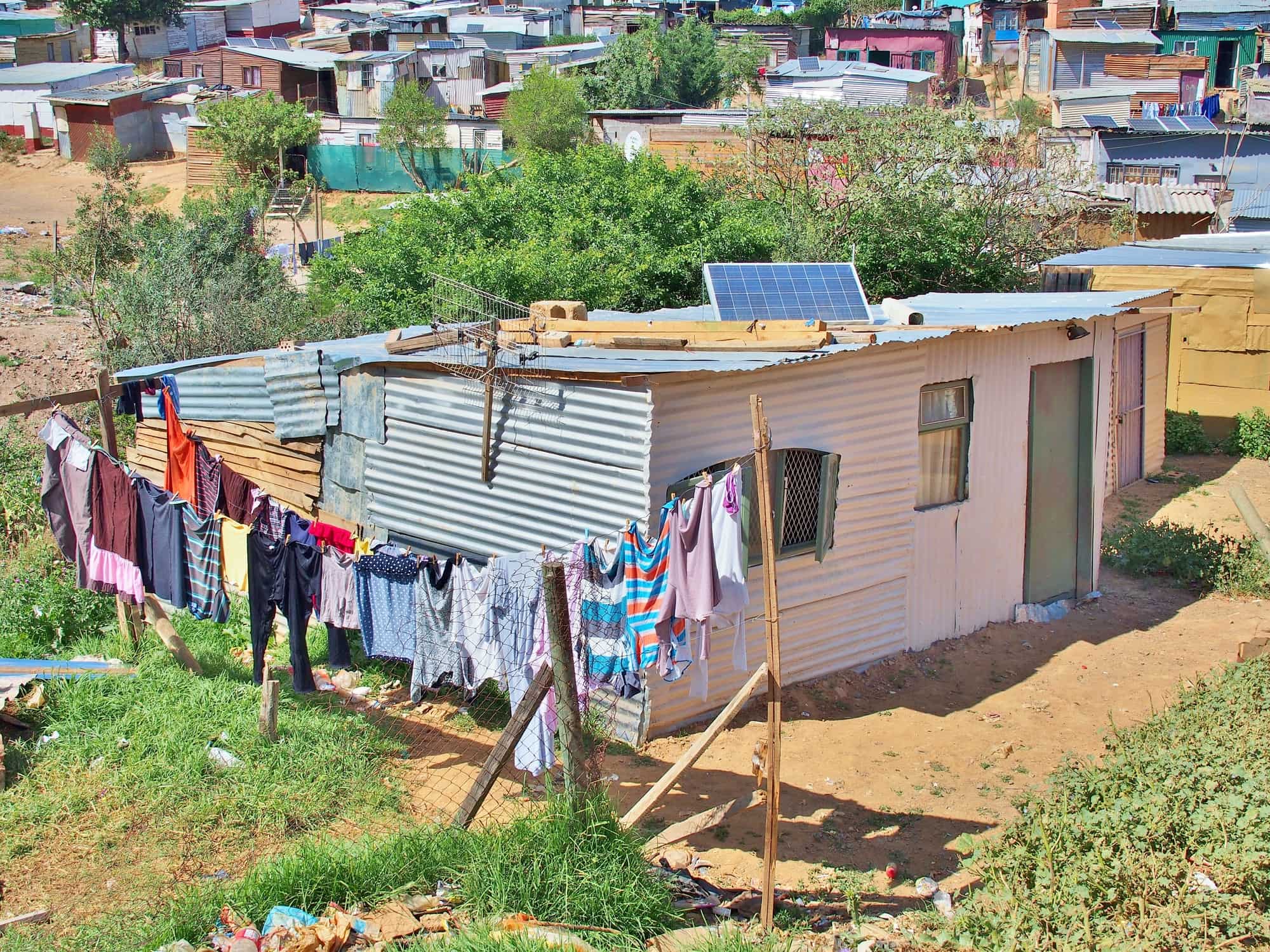
Off-grid solar has become a critical tool in Africa’s efforts to electrify far-flung communities, recent data releases show.
The context: Around 597 million people in sub-Saharan Africa — or 40% of the region’s population — still don’t have access to electricity, according to the most recent data collated by the International Energy Agency (IEA).
Without electricity, those people are essentially locked out of the formal economy and don’t have access to modern healthcare, quality education, and other services.
The latest: Now that solar PV is the cheapest source of electricity in history, African governments are increasingly leaning on the technology to plug the power access gap. In the process, they’re largely leapfrogging the traditional, centralised electrification model.
In 2024, 4.8 million people in sub-Saharan Africa got access to electricity for the first time via national grids or mini-grids (the vast majority of which are now powered by solar, rather than diesel), per the IEA. Solar home systems provided first-time electricity access to another 2 million people.
In recent years, mini-grids and household-level solutions have accounted for more than half of all new electricity connections in sub-Saharan Africa.
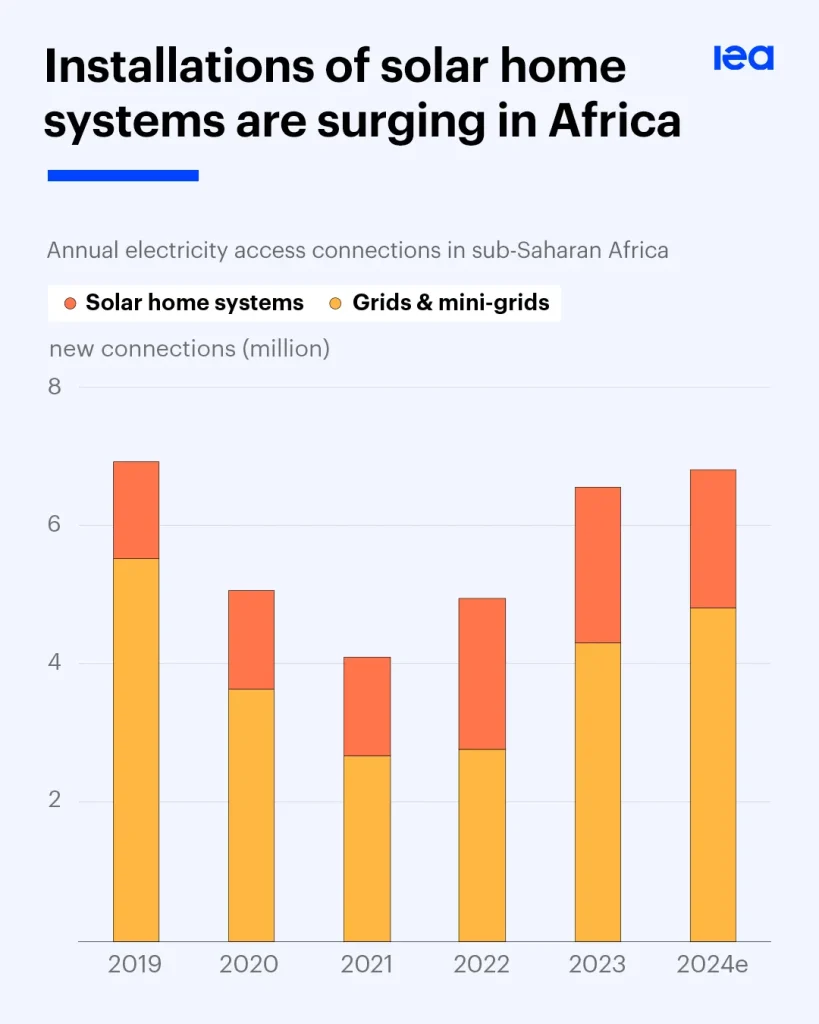
Home solar arrays alone have been responsible for one-third of all new electricity connections in sub-Saharan Africa over the past two years — from almost nothing just a decade ago. Around 4% of the region’s population now has electricity thanks solely to home solar systems, while another 2-3% uses the technology to supplement their unreliable or costly grid supplies.
In many markets, household solar benefits from state and international support. The Ghanaian government’s 17MW rooftop solar programme, for instance, is partly funded by the International Finance Corporation (IFC). Pay-as-you-go rooftop solar financing models, led by the private sector, have also played an important role in reducing barriers to access.
At the same time, the mini-grids market is growing quickly partly because more countries have introduced regulatory frameworks to facilitate the financing and implementation of these projects, the IEA says.
Countries such as Nigeria and Uganda have seen an acceleration in the number of mini-grid licence approvals and customer connections thanks to supportive legislation.
Under Nigeria’s electrification programme, launched in 2018, around 5.5 million people have gained access through the installation of 125 mini-grids and more than 1 million solar home systems, according to the World Bank.
The government has also exempted smaller mini-grids from licensing and tariff approvals, meaning operators can set tariffs in consultation with communities. That’s helped push Nigeria’s off-grid solar energy capacity to 124MW at last count, from just 11MW in 2015, according to the International Renewable Energy Agency (IRENA).
Since it’s slow and costly to expand national power networks, decentralised solar-based mini-grids are “the most viable pathway to electrify underserved communities,” says Sam Duby, managing director of TFE Africa, a South African company that advises on the United Nations Development Programme’s African Mini Grids Programme.
As a result, some countries are leapfrogging the era of centralised power networks, at least in part. In the Seychelles, for example, nearly 8% of the population is connected to mini-grids. Madagascar, meanwhile already has at least 357 of these facilities, according to a report commissioned by the Mini-Grids Partnership.
Mali’s rural electrification agency says 32 solar mini-grids, run by WeLight and Africa GreenTec, provide power to more than 2 million people. Elsewhere, Easy Solar has brought solar power to over a million people in Sierra Leone and Liberia, which have a combined population of more than 14 million. Sierra Leone’s government plans to have 27% of the nation’s rural population served by mini-grids by 2030.
The mini-grid boom represents “an unprecedented leap forward in the history of global rural electrification,” according to Husk Power Systems, an operator that serves 1.5 million people in Nigeria and India. The company aims to have 2,500 mini-grids across Africa by 2030.
However, Duby says progress remains far too slow, partly because it’s difficult for private mini-grid operators to provide paid-for energy services to some of the poorest people in the world. In many cases, state subsidy programmes are ineffective.
“We argue that electrification efforts need to be coupled with demand stimulation,” Duby tells The Progress Playbook. “If electricity can be used productively — for example in processing agricultural output to capture more value locally — it’s more likely that people will be able to afford to buy the energy and more likely that the mini-grid company will be viable.”
To accelerate things, concessionary (or cheap) finance is needed to reduce investor risk, and consumption-based subsidies are required, he adds.
Other hurdles will need to be overcome too, including Africa’s debt crisis and the poor financial health of many utilities, the IEA says.
Against this backdrop, the World Bank and the African Development Bank recently committed to delivering electricity to 300 million Africans by 2030 under an initiative called Mission 300. The programme will focus on expanding national power networks while also deploying mini-grids and standalone solar systems in hard-to-reach areas.
Off-grid solar technologies offer the most effective, cheapest, and fastest way to reach almost half of the 300 million people targeted, according to the World Bank-backed Global Electrification Platform.
In its net-zero scenario model, the IEA says mini-grids will likely account for 30% of all new electricity connections in Africa, and standalone systems 25%. That means traditional grids will do less than half the job in the years ahead.
While it’s early days yet, Africa’s off-grid solar revolution is starting to gain real traction. The continent installed a modest 2.4GW of solar in 2024, but will add another 23GW by 2028 — more than doubling its current capacity by then, according to forecasts by the Global Solar Council.