Skip to content



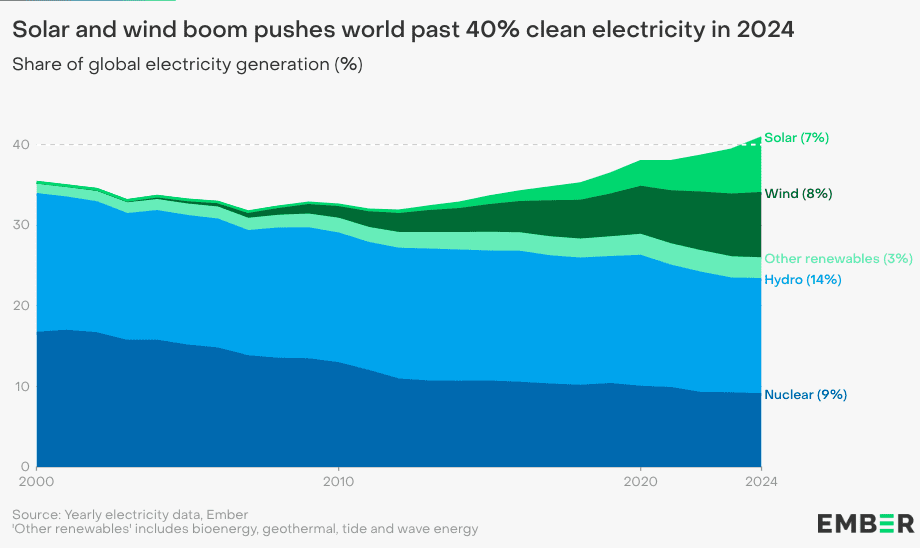
Clean power technologies — renewables and nuclear — accounted for 40.9% of global electricity generation in 2024, according to a new report by energy research group Ember.
That’s up from 39.4% the year before (and 32.8% in 2014), with the growth driven largely by the ongoing surge in solar installations. Solar’s share of the overall mix reached 6.9%, up from just 0.8% in 2014.
As of last year, 80 countries now generate more than 50% of their electricity from clean sources. Of those, 47 get more than 75% of their power from renewables and nuclear. The European Union is leading the way, with clean technologies accounting for 71% of the bloc’s electrical output.
However, global electricity demand was up 4% — driven in part by increased air conditioning use amid worsening heatwaves — and this more than offset the gains made in clean energy. Renewables and nuclear met 79% of the demand increase, with fossil fuels covering the rest.
As a result, power sector emissions edged 1.6% higher to yet another new all-time record.
“Despite this, it remains clear that clean generation growth and the uptake of flexible technologies such as battery storage will reduce reliance on fossil fuel power in the coming years, even in a world of faster demand growth,” Ember said in a statement.
Even if electricity demand grows at 4.1% per year until 2030 — which would exceed current expectations — clean generation growth will be fast enough to keep pace, per the group’s forecasts. As such, fossil generation “is set for structural decline” from here on, and China’s electricity output from coal, oil and gas may have already peaked.
“Solar power has become the engine of the global energy transition,” says Phil MacDonald, managing director at Ember. “Paired with battery storage, solar is set to be an unstoppable force.
“Those expecting fossil fuel generation to keep rising will be disappointed. Cleantech, not fossil fuels, is now the driving force of economic development. The era of fossil growth is coming to an end, even in a world of fast-rising demand,” MacDonald says.