Skip to content


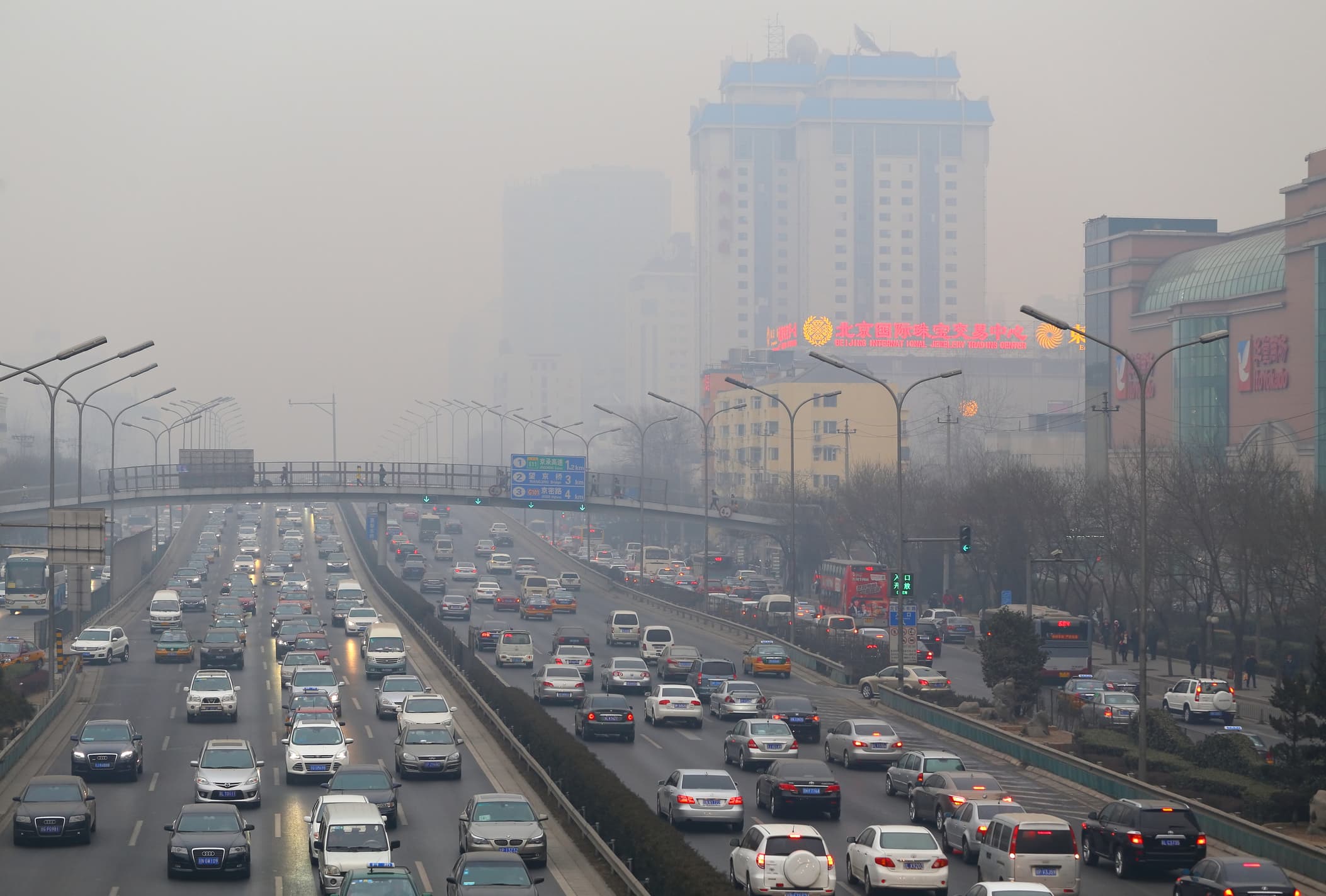
Beijing’s air pollution levels have fallen dramatically since peaking 12 years ago thanks to a series of regulatory interventions, data shows.
The context: Fuelled by a growing population and rising wealth, the number of cars and factories in and around the city swelled in the 1990s and 2000s. By 2013, concentrations of fine particulate matter (PM2.5) reached an average of 89.5 μg/m³, which is 18 times the World Health Organization’s recommended safe limit.
Around that time, authorities started taking the problem more seriously. The local government began publishing weekly air quality reports and introduced more stringent laws targeting coal combustion, construction, household fuel burning, and transport, according to the UN Environment Programme.
Beijing’s five-year action plan, announced in September 2013, tightened emissions standards and closed enforcement loopholes.
“For instance, local authorities instituted a city-wide lottery on license plates for anyone that wanted to purchase a new fossil fuel-burning car,” UNEP noted in a recent report. “Those wishing to buy an electric car, however, were able to obtain a plate more easily, encouraging citizens to switch to cleaner modes of transport.”
Partly because of these kinds of local government interventions, half of all new cars sold in China nowadays have a plug.
Meanwhile, authorities also helped households to switch from coal-fired boilers to cleaner fuels, and worked to repair degraded ecosystems while also increasing the amount of green spaces within the city, UNEP says.
The latest: By 2017, the average PM2.5 concentration had dropped to 58ug/m3, while concentrations of sulphur dioxide and nitrous dioxide had plummeted. And those gains have been sustained in the years since.
In the 12 months to the end of March 2025, average PM2.5 concentrations had fallen to 29.1 μg/m³, according to data collated by the Centre for Research on Energy and Clean Air (CREA). That translates into a 67% decline since 2013.
“The city’s transformation — through stringent emissions controls, energy restructuring, industrial relocation, and regional coordination — offers valuable lessons for other provinces and countries grappling with similar challenges,” Chengcheng Qiu, CREA’s China policy analyst, tells The Progress Playbook.
“Beijing’s progress is not isolated,” Qiu adds. “It reflects the broader improvements achieved in the northern air pollution control region, which includes surrounding provinces like Hebei and Tianjin, thanks to coordinated regional efforts.”
Yes, but: While Beijing has made substantial gains in recent years, its air is still considered unsafe by the World Health Organization. There are growing calls for even stricter interventions.