Skip to content



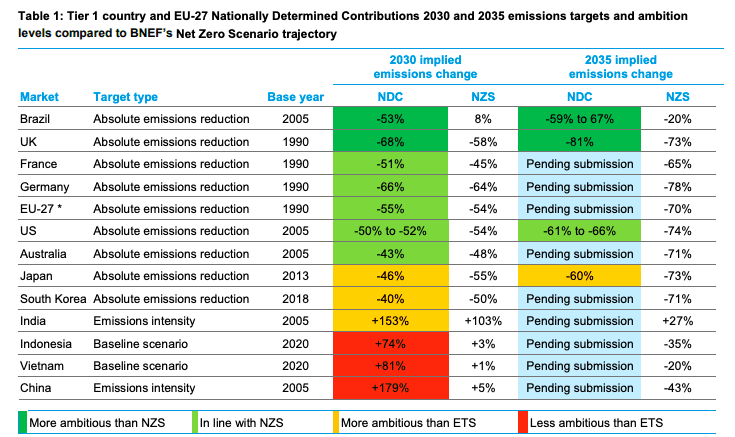
Brazil and the UK have set 2035 decarbonisation targets that are aligned with what’s required to avoid the worst impacts of climate change, according to an analysis by BloombergNEF.
The background: So far, only 20 countries have submitted their nationally determined contributions (NDCs) — or climate change mitigation pledges to the world — for the next decade. Most nations missed the deadline to do so, and of those that have submitted them, few have promised to cut emissions enough to avoid catastrophic levels of global heating.
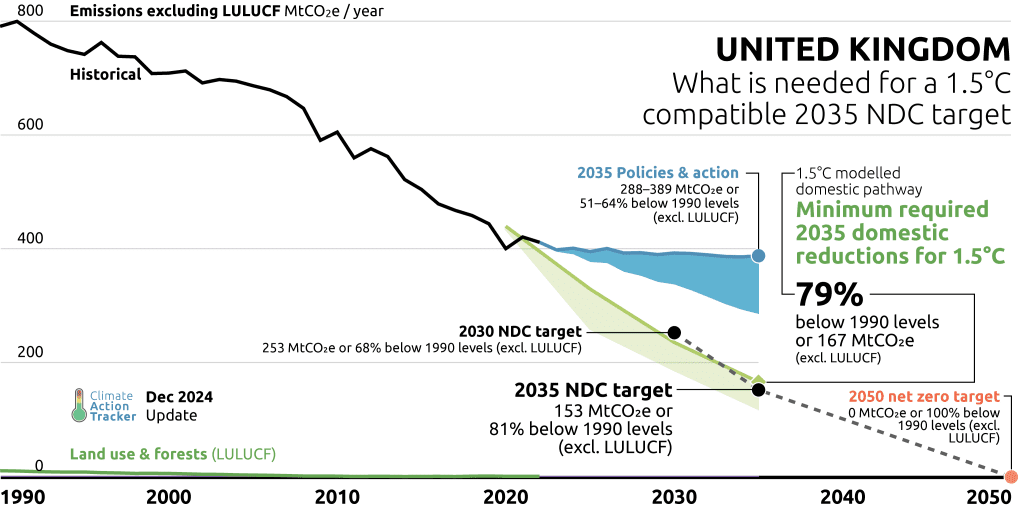
The latest: Host of the next global climate conference, Brazil has pledged to reduce its total net greenhouse gas emissions by 59–67% by 2035, relative to 2005 levels, while the UK says it’ll aim to slash emissions to 81% below 1990 levels by then.
If they meet those goals, both countries would “outperform our net zero scenario,” BloombergNEF says in its new energy outlook publication, referring to a scenario in which global warming is limited to 1.75° Celsius, which is considered far safer than breaching the 2°C threshold.
The UK’s NDC has been given the rare label of “ambitious” by Climate Action Tracker, an independent scientific organisation that tracks and rates countries’ decarbonisation efforts.
Among other things, the UK recently shut its last coal-fired power plant and aims to almost eliminate emissions from its electricity sector by 2030.
Brazil, meanwhile, also operates one of the world’s lowest-carbon electricity systems and is a major supplier of sustainable aviation fuels. However, the nation’s NDC is much more difficult to assess as there’s insufficient data about land use changes, including deforestation, Climate Action Tracker says.
As such, Climate Action Tracker says the UK is the only country with credible plans to do its part to limit warming to reasonably safe levels.
Even then, ambition alone doesn’t mean much if it’s not backed by action.
Meanwhile, BloombergNEF says Japan’s commitment falls short of its net zero scenario, while the US’ NDC “is considered defunct given the change of government.”
Based on current policies, the world is on track to warm by about 2.7°C above pre-industrial levels, according to Climate Action Tracker.