Skip to content


A pilot project in South Africa has demonstrated how low-carbon building designs can yield substantial long-term cost savings for low-income communities, among other benefits, according to a new peer-reviewed study.
The context: South Africa has a shortfall of around 2.4 million affordable housing units and is grappling with a cost-of-living crisis driven in part by steep increases in electricity prices. To meet its developmental goals, the country will need to rapidly scale up its housing programme while simultaneously shielding low-income communities from high utility costs.
The latest: A 50m2 prototype house, built using sustainable materials and equipped with energy-efficient appliances and solar energy technology, showed a 97% reduction in day-to-day CO2 emissions and an 82% decline in costs over its lifetime, compared to a conventional low-income home, the researchers behind it have found.
The vast improvement in both metrics is mostly attributable to lower energy use and on-site clean energy generation.
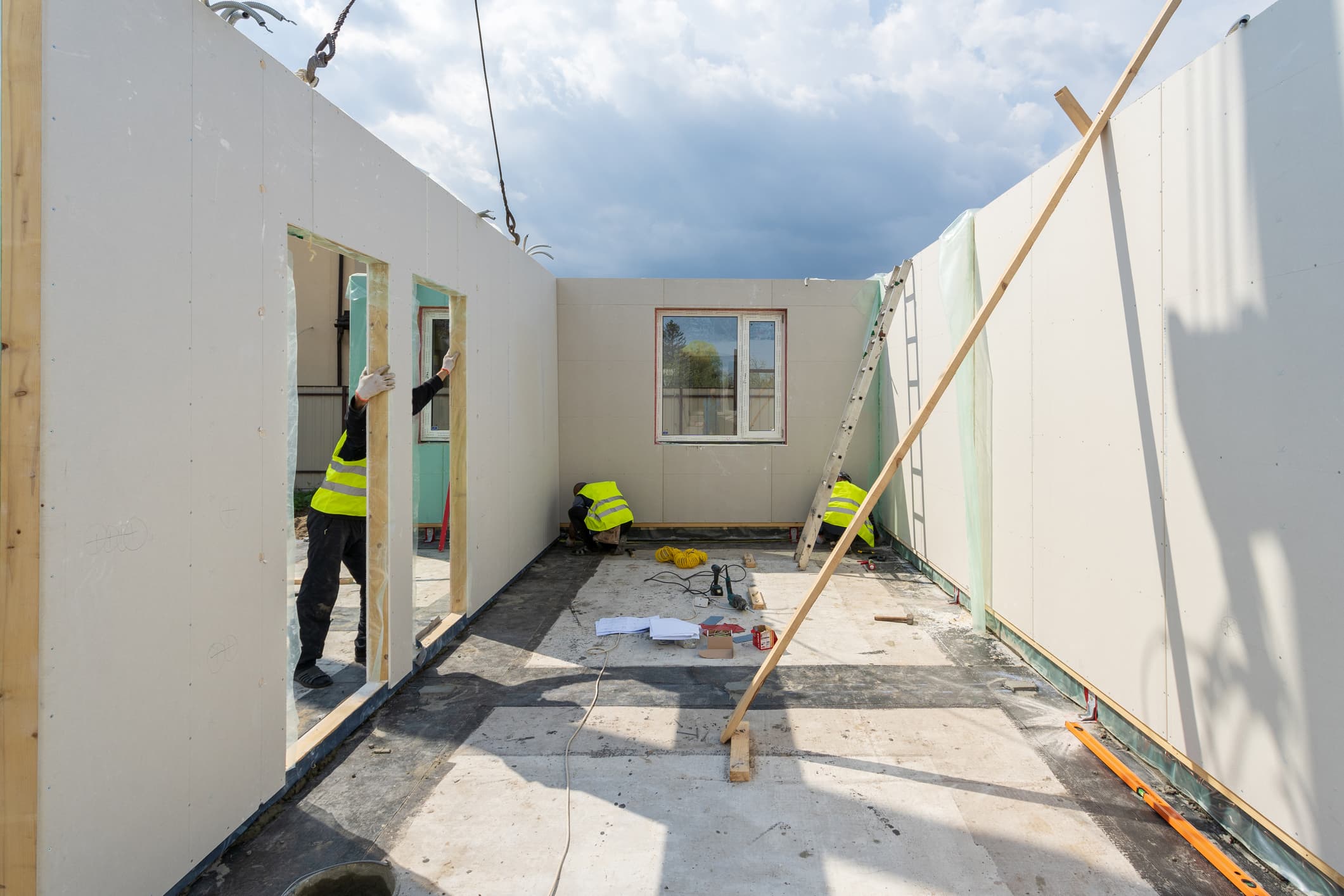
Constructed in just three days, the house uses prefabricated structural insulated panels for walls, rather than cement blocks. It employs “passive design” principles, including optimal building orientation, natural shading, and double-glazed windows.
It also uses far less energy than traditional homes thanks to its high-efficiency electrical fittings and appliances, LPG cooker, and solar water heater. And it’s powered by a solar array and energy storage system.
The construction phase was much quicker and yielded less waste than a conventional project, per the study, which was published in the scientific journal Building and Environment and authored by researchers at the University of Cape Town and University of Johannesburg.
“Innovative building technologies offer a transformative opportunity to address the housing deficit, mitigate the energy crisis, and contribute to carbon neutrality targets,” the authors write, adding that this solution would also address pervasive quality issues in South Africa’s low-income housing market.
The researchers argue that national and local governments, developers, and housing professionals should collaborate on a large-scale roll out of this type of housing, using locally made materials.
Yes, but: While the prototype delivers substantial lifetime cost savings thanks to on-site solar energy production, it cost 37% more to design and build due to higher component costs.
This is generally “the most significant hurdle” to the deployment of better technologies in low-income settings, says Sam Duby, managing director of TFE Africa, a South African company that advises on the United Nations Development Programme’s African Mini Grids Programme.
“Even if the long-term savings are clear, this inability to deploy more capital upfront means low-income communities pay proportionally higher living costs over time than their wealthy counterparts.
“This classic problem is not unique to South Africa – it’s common the world over and is one of the root causes that the disadvantaged are often locked into the gruelling cycle of poverty,” Duby says.
But innovative financing mechanisms, such as small-scale power purchase agreements (PPAs) for on-site solar energy, “allow for more long-term thinking and the monetisation of future gains upfront.”
To that end, local municipalities can facilitate projects and leverage private-sector funding for the public benefit. “It’s a win-win-win,” Duby says.