Skip to content


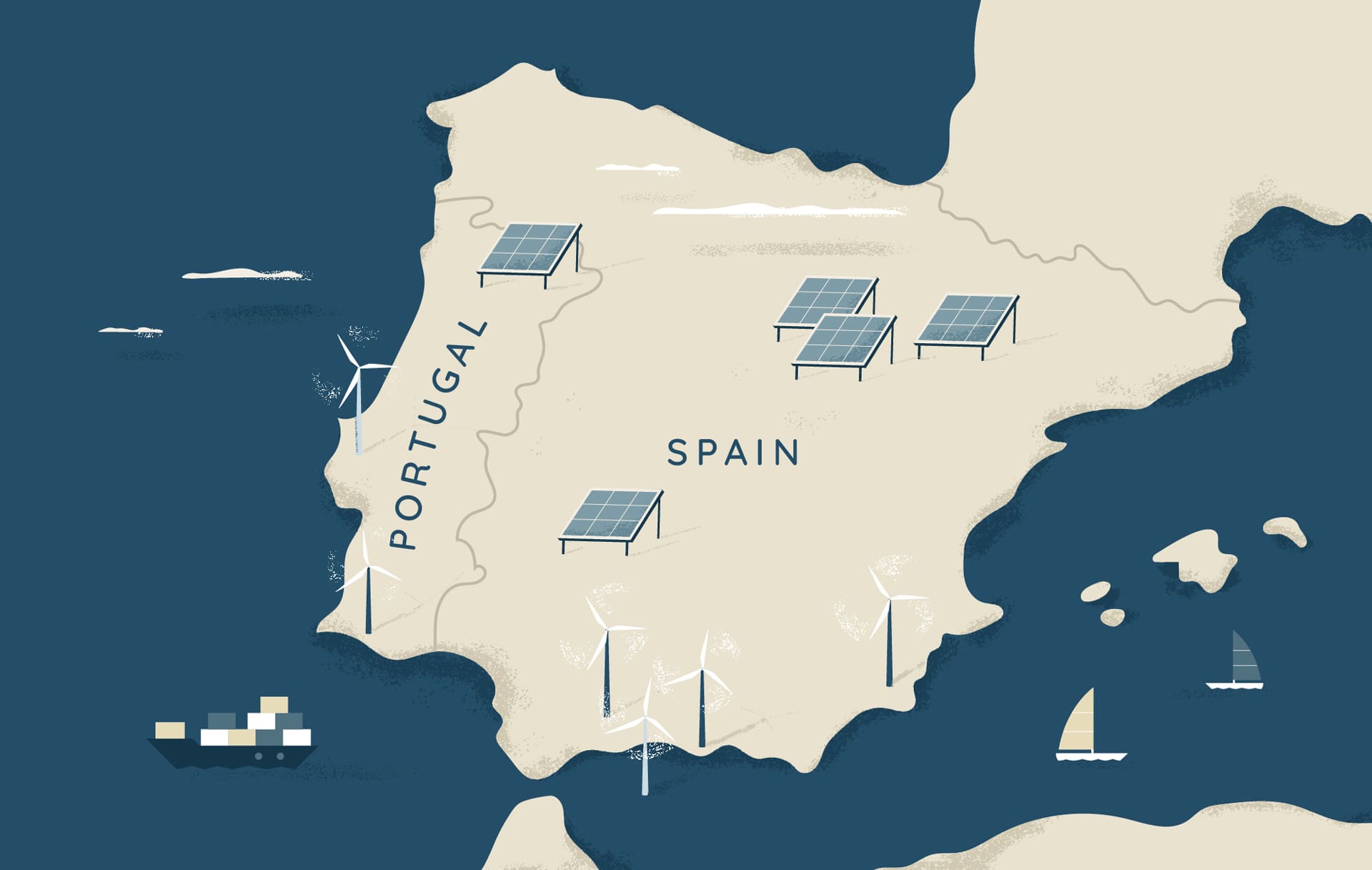
Spain’s rapid deployment of wind and solar energy has slashed the influence of expensive gas and coal plants on electricity prices by 75% since 2019, according to new analysis by research group Ember. As a result, the country is now one of the cheapest electricity markets in Europe.
“Spain has broken the ruinous link between power prices and volatile fossil fuels, something its European neighbours are desperate to do,” says Chris Rosslowe, senior energy analyst at Ember.
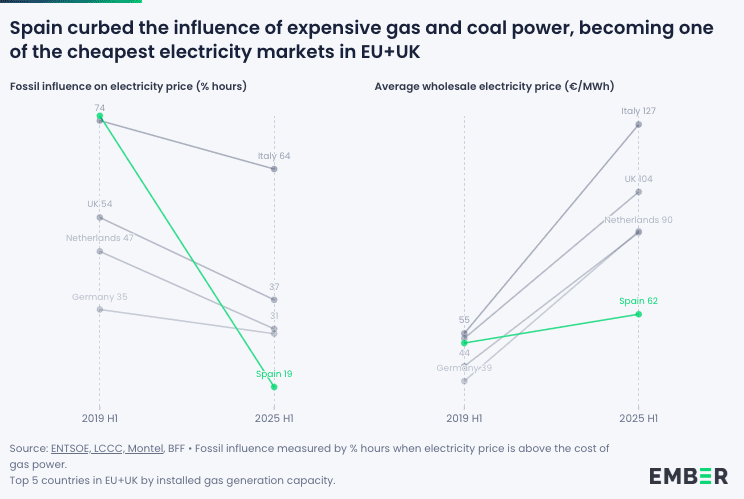
Spain has reduced the influence of fossil fuels faster than in other gas-reliant countries like Germany and Italy, which saw just a 12% and 13% drop, respectively, in the hours when the electricity price was tied to gas power costs.
In European and many other power markets, the most expensive generator operating – typically gas or coal – sets the hourly wholesale electricity price. As the share of cheaper renewables grows, fossil fuels determine the price less often.
The analysis found that fossil generators influenced Spain’s electricity price in just 19% of hours in the first half of 2025, the lowest share among the five European countries with the largest gas fleets. As a result, Spain’s wholesale electricity price was 32% lower than the EU average. This marks a significant shift since 2019, when Spain had some of Europe’s most expensive electricity, with fossil generators setting the price in 75% of hours in the first half of the year.
The turnaround has been driven by a surge in renewable energy output. Wind and solar met almost half of Spain’s electricity demand in the first half of 2025 (46%), up from 27% in the same period in 2019. By contrast, fossil generation accounted for just 20% of electricity demand in Spain, much lower than in Germany (41%) and Italy (43%).
Costly reliance on gas for grid stability
Despite Spain’s progress in decoupling power prices from gas, Ember warns that an increase in reliance on gas power for grid stabilisation following the Iberian blackout in April 2025 has been costly, highlighting the need for investment in clean flexibility solutions, such as batteries and interconnections.
The use of gas for grid services doubled in May 2025, compared to the same period last year, and was responsible for 57% of the final electricity price that month, up from 14% last year. As a result, curtailment of renewables has tripled since the blackout, from 1.8% in the last two years to 7.2% during May-July 2025.
“Spain risks sliding back into costly gas reliance amid post-blackout fears,” says Rosslowe. “Boosting grids and batteries will help Spain break free from fossil dependency for good.”
According to a report by an independent panel of experts convened by the European Network of Transmission System Operators, the Iberian blackout was not caused by an over-reliance on renewables, as some pundits had claimed.
Rather, it was caused by a series of cascading events that escalated due to multiple failures throughout the system.
“The findings contradict numerous claims that an over-reliance on solar power was to blame,” says Rosslowe. “This event reinforces what we already knew. As power systems evolve, enhanced grid upgrades and a focus on clean flexibility are essential for resilience.”