Skip to content



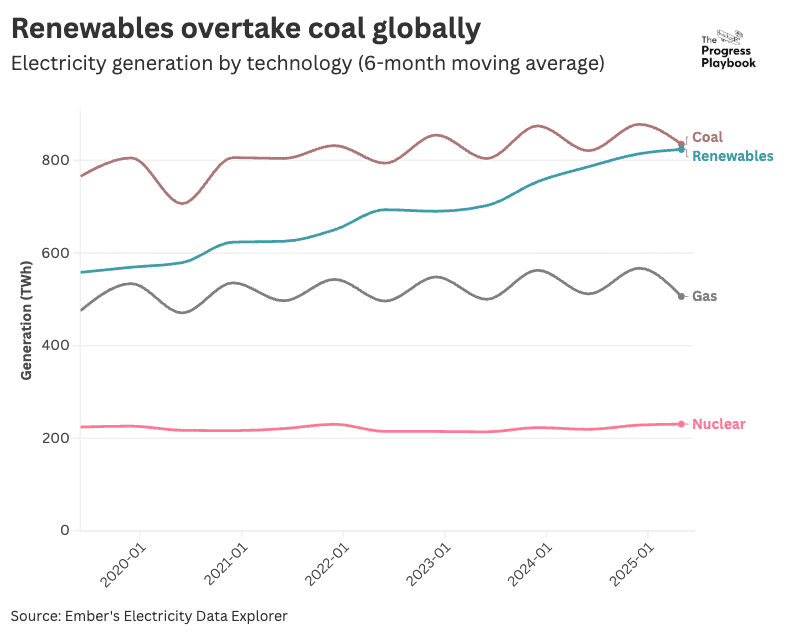
Global electricity generation from fossil fuels edged slightly lower in the first half of 2025 as the wind and solar boom outpaced demand growth, and as all renewable technologies overtook coal for the first time, according to a new analysis by research group Ember.
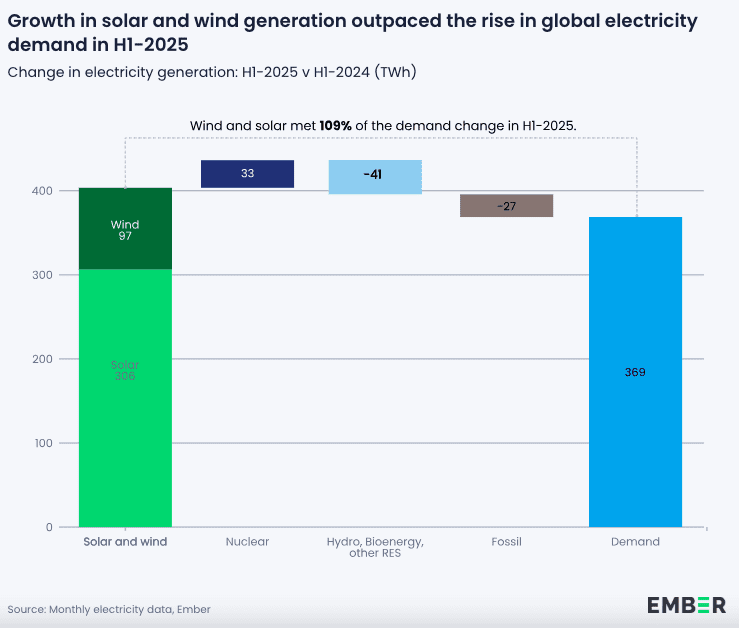
Electricity consumption was up 2.6% (369 TWh) over the six-month period, but that was more than met by increases in solar (306 TWh, or a 31% jump) and wind (97 TWh, or up 7.7%) output. Solar alone covered 83% of the demand rise.
As a result, total fossil generation declined 0.3%. Output from coal, gas and oil-burning plants was down in China and India, but grew in the EU and the US.
The share of renewables in the global electricity mix climbed to 34.3%, eclipsing coal (33.1%).
The transition towards clean sources is not happening nearly fast enough to avoid the worst impacts of climate change, but represents “the first signs of a crucial turning point,” Ember analyst Małgorzata Wiatros-Motyka said in the report.
“Solar and wind are now growing fast enough to meet the world’s growing appetite for electricity. This marks the beginning of a shift where clean power is keeping pace with demand growth,” says Wiatros-Motyka. “As costs of technologies continue to fall, now is the perfect moment to embrace the economic, social and health benefits that come with increased solar, wind and batteries.”
In a separate report, the International Energy Agency said global renewable power generating capacity will likely double between now and 2030, with another 4,600 GW added over that time.
That’s a little less than previously expected, largely due to US president Donald Trump’s assault on clean energy.
The world will fall short of a multilateral target to triple renewables capacity by 2030, versus 2022 levels. Instead, capacity is on track to rise 2.6 times over that period.