 Skip to content


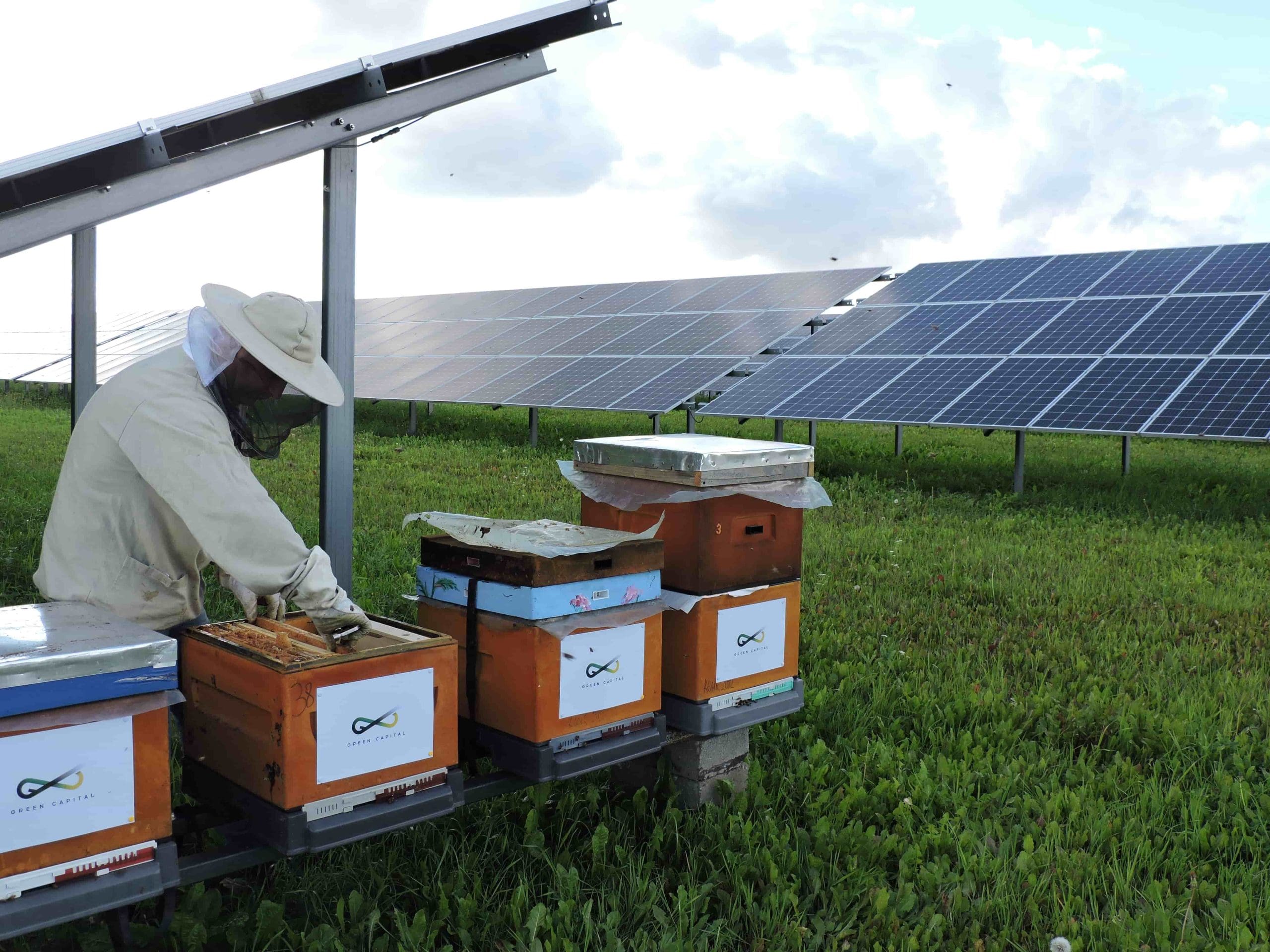
Polish renewable energy developer Green Capital has started installing beehives around some of its solar power plants, saying it’s a practical way to support local ecosystems.
“Our initiative demonstrates that modern technologies and traditional production methods can coexist in a way that not only protects but also enriches biodiversity,” the company said in a statement.
A beekeeping facility alongside the group’s solar system in Gałwuny, Poland, has already delivered 200kg of honey since it was set up in late June. The honey is given to employees, rather than sold, Green Capital tells The Progress Playbook.
A similar model has since been implemented at a solar farm near Kętrzyn, in collaboration with Dionizos Apiary.
“Bees, as key pollinators, play a fundamental role in maintaining plant health and improving soil quality,” Green Capital says.
“Their presence on our solar farms not only enriches the local ecosystem but also provides the benefit of producing natural and healthy honey. Furthermore, the solar farm offers an ideal environment for bees.”
Other organisations have also sought to combine solar power with biodiversity improvements.
The city of Amsterdam, as an example, is developing a community-run “solar meadow”, where panels will be raised and spread out, with the aim of establishing a haven for plant, insect and bird life.







One Response
Solar has never had a spill, if it has, it is called a sunny day.